Debrief
Fandom has left the toy aisle.
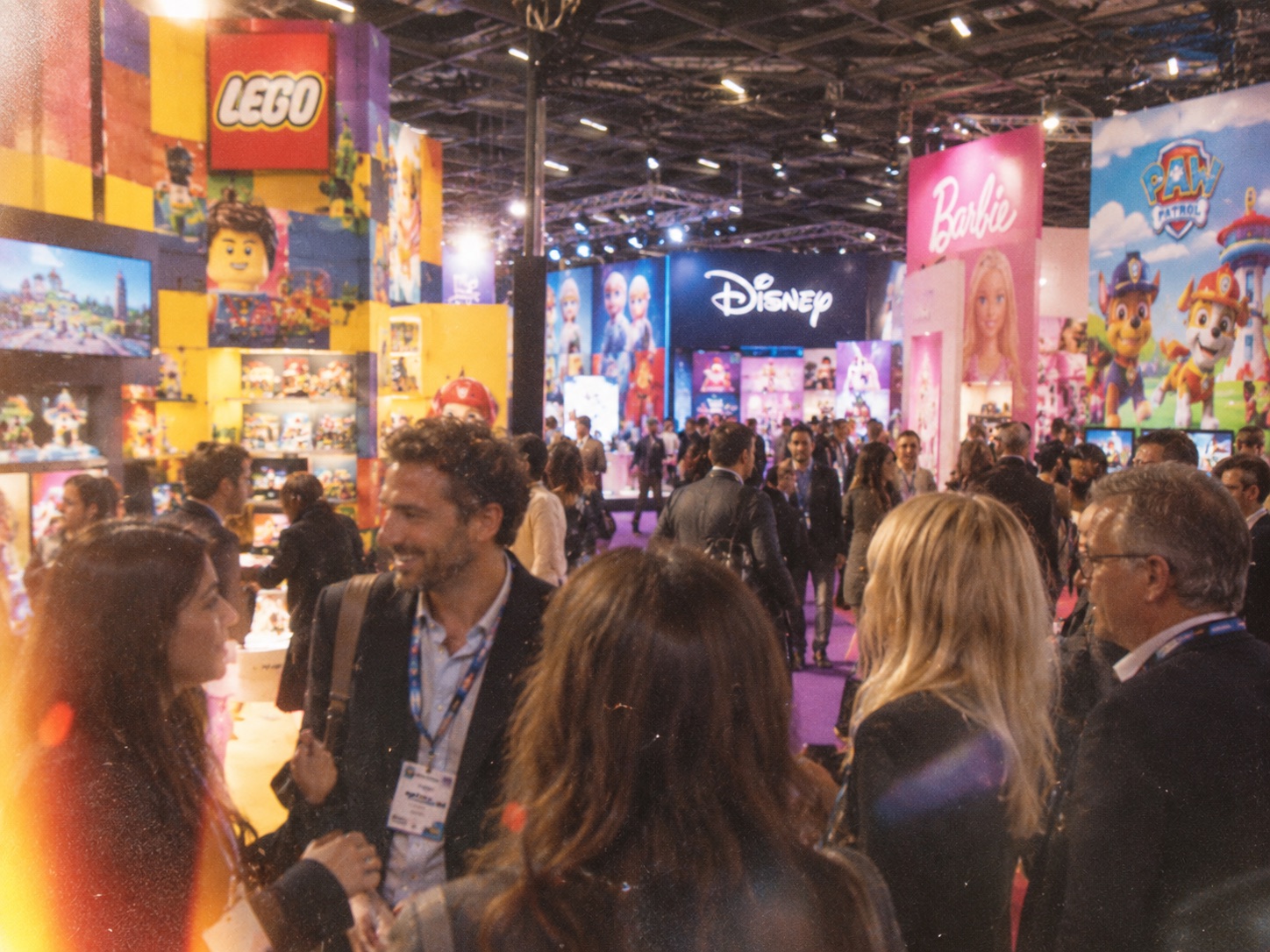
BLE 2026 shows licensing moving beyond products and into family routines, shared identity and cross-generational culture.
The category tells you what the product is. Family life tells you what the IP becomes.
What we found
Brand Licensing Europe returns to ExCeL London from 6 to 8 October with a record 325 exhibitors.
That scale matters, but the more interesting signal is what those exhibitors now represent.
Licensing is no longer concentrated in toys and entertainment. The show spans food and beverage, fashion, sport, heritage, art, gaming, publishing, museums, lifestyle and location-based experiences.
The UK toy market offers a useful snapshot of why. Licensed toys grew 16% year on year in 2025 and now account for 38% of toy sales. Kidult spending continues to expand. Collectibles are growing. Video-game-linked toys surged. And Circana describes shared entertainment as a driver of screen-to-play moments between parents and children.
In other words, fandom is broadening in two directions at once: across generations and across categories.
The Famdom read
The licensing industry often talks about extension.
We think the more useful question is role.
What role does this IP earn inside family life?
A character can begin on a screen and end up in breakfast, bath time, school, travel, collecting, dressing up, gifting or the Friday-night routine. Those are not just category extensions. They are different places inside family life.
That is why the most valuable licensing strategy does not begin with “what else can we put the logo on?”
It begins with: where does this story already matter, and what could it genuinely help families do, feel, express or repeat?
Fandom is increasingly shared
The old distinction between “children’s IP” and “adult fandom” is becoming less useful.
Parents introduce children to Star Wars, Peanuts, Barbie, Pokémon, Disney and the franchises they grew up with. Children pull parents into Minecraft, Bluey, gaming worlds, anime and creator-born culture. Teenagers, siblings and grandparents add their own routes in.
The family is not one audience consuming the same thing in the same way.
It is a network of people carrying the same IP for different reasons.
For one person it is nostalgia. For another it is play. For another it is identity, collecting, humour or social belonging.
That is not a problem for licensing. It is the opportunity.
The licence is entering the routine
One of the clearest examples at BLE is Bluey.
BBC Studios is extending the franchise across toys, publishing and audio, but also into food, health and beauty, partyware and everyday family categories. Partnerships with companies including Heinz, Kellogg’s, Childs Farm and Specsavers move the character into moments that have nothing to do with sitting down to watch an episode.
Breakfast. Bath time. Getting glasses. Getting ready.
This is where licensing becomes more interesting.
An IP earns more than visibility when it can make an ordinary family moment easier, more playful, more reassuring or more meaningful.
The licence stops decorating the product.
It starts changing what the product means.
Asian pop culture is changing the mechanics
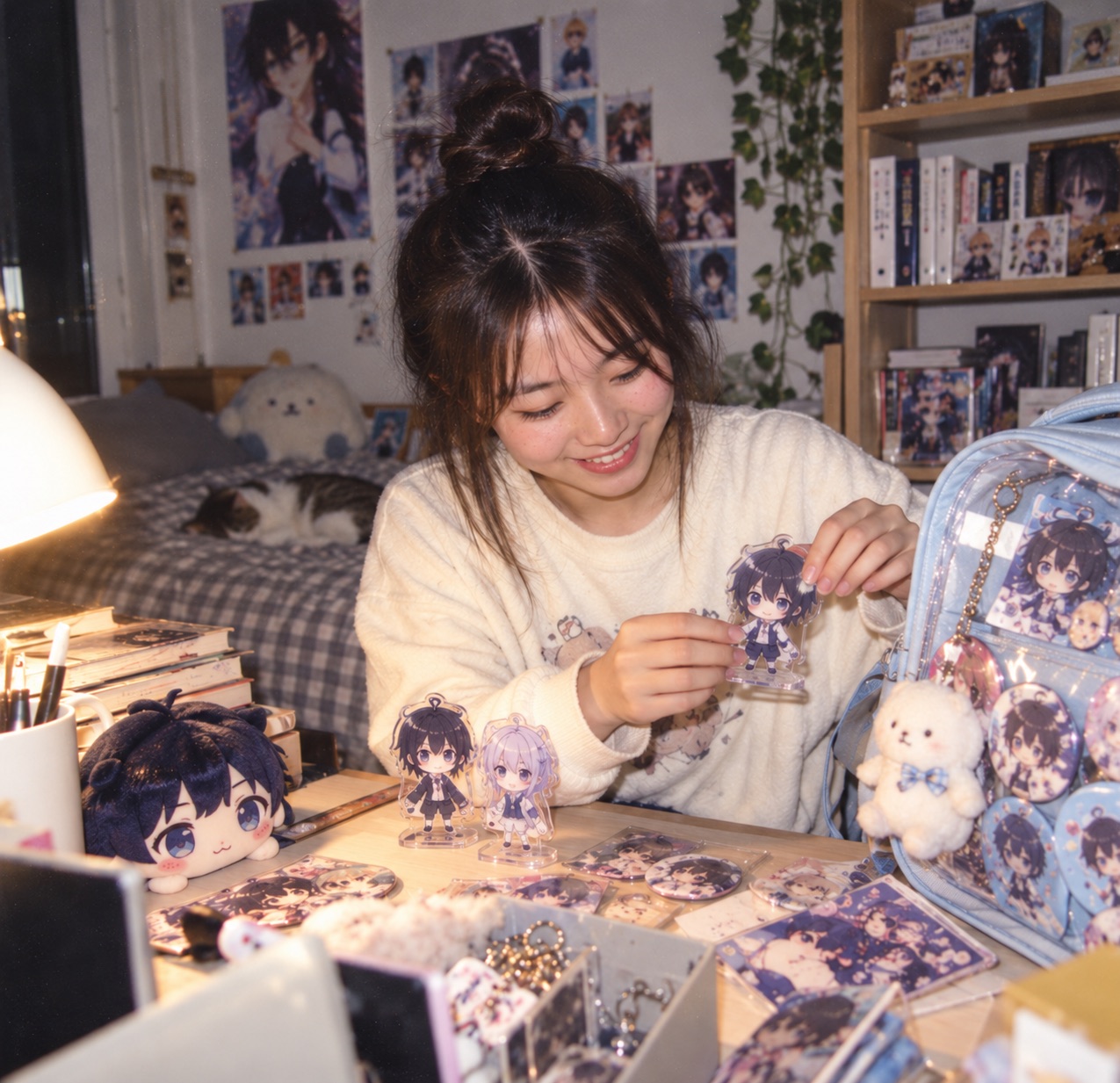
The rise of Pop Mart, MINISO and other APAC-influenced collectible formats adds another layer.
Blind boxes, micro-collectibles, plush and mini figures combine accessible price points with scarcity, reveal, display and repeat purchase. They appeal across children, teenagers and adults because the object is doing several jobs at once: collecting, identity, gifting, social currency and fandom.
The lesson is not that every Western IP now needs a blind box.
The lesson is that fandom becomes stronger when people are given behaviours around it.
Open it. Trade it. Display it. Carry it. Complete it. Gift it. Show someone else.
Those behaviours are what turn merchandise into participation.
The physical object is not the endpoint
The strongest licensed object is rarely valuable only because of the object itself.
A toy can recreate a screen moment. A collectible can make identity visible. A school item can carry belonging into another social space. A food collaboration can turn an ordinary purchase into a small family event. A location-based experience can turn fandom into a shared memory.
That is the shift we think matters most.
Licensing is moving from “put the IP on more things” towards “give the IP more ways to live”.
That is a much bigger creative and commercial brief.
Experiences are part of the same system
BLE is also giving more space to location-based entertainment, and that makes sense.
If merchandise gives fandom something to hold, experiences give it somewhere to happen.
A family does not remember a licence agreement. It remembers the day, the joke, the photo, the queue they did not mind, the thing the child would not stop talking about afterwards.
Experience is where an IP can move from consumption into shared memory.
For family-first companies, that matters because memory and ritual sit much closer to belonging than reach does.
What companies should build now
The wrong response to BLE is to ask how many categories an IP can enter.
The better questions are:
Which family moments does this IP already have permission to enter? Which generations carry the relationship, and for different reasons? What behaviour should the product create beyond purchase? Can the object become play, identity, collecting, gifting or ritual? What category would genuinely add value to the relationship? Where would the IP feel forced? And what needs to stay consistent so expansion does not dilute trust?
That is where licensing becomes family strategy rather than logo distribution.
What this means for family-first companies
We believe the future belongs to IP owners and partners who design from the family relationship outward.
Start with what the story means. Understand who in the family carries it. Map how the decision moves. Then build the product, experience or partnership that deserves to exist.
That approach is good for families because it creates fewer meaningless extensions and more useful, joyful or memorable ones.
And it is good for business because an IP that earns several real roles inside family life has more ways to grow without becoming disposable.
The goal is not to be everywhere.
It is to belong somewhere that matters.
Inside this Debrief
- Why shared fandom is making licensing more multigenerational
- How licensed IP is moving from toy aisles into everyday family routines
- What Asian collectible culture teaches us about participation and repeat purchase
- Why the best licensing extensions create behaviours, not just products
- How experiences can turn fandom into shared memory
- What IP owners should ask before entering a new category
Sources and verification
- Brand Licensing Europe / License Global, BLE 2026 programme and exhibitor coverage, September to October 2026.
- The Toy Book, “Brand Licensing Europe 2026 Sets Record with 325 Exhibitors”, 2 October 2026.
- License Global, “Toy Trends on Display at London Toy Fair 2026”, 20 January 2026.
- The Toy Book, “Brand Licensing Europe 2026 Sets the Stage for Licensed Play”, 2026.
- License Global, BLE 2026 Issue, 28 September 2026.
Editorial note: Event dates, exhibitor numbers and UK toy-market figures are sourced from current industry reporting. The interpretation of shared fandom, family roles, belonging and what companies should build is Famdom Observatory’s editorial view.
Debrief completo
Get the full Debrief
Déjanos tus datos y el Debrief completo es tuyo: el trabajo de campo, los tres aprendizajes y lo que una marca hace con ellos.
Gracias.
El Debrief va de camino a tu bandeja de entrada.
No ha llegado. Revisa tus datos e inténtalo de nuevo.
Also in the Observatory
Questions about this piece
What does BLE 2026 show about licensing?
Brand Licensing Europe returns to ExCeL London from 6 to 8 October with a record 325 exhibitors, spanning food and beverage, fashion, sport, heritage, art, gaming, publishing, museums, lifestyle and location-based experiences. The Debrief reads this as licensing moving beyond products and into family routines, shared identity and cross-generational culture, with fandom broadening across generations and across categories at once.
Why does this matter for IP owners and family-first companies?
The Debrief argues the useful question is not extension but role: what role does this IP earn inside family life? An IP that earns several real roles has more ways to grow without becoming disposable. Designing from the family relationship outward also means fewer meaningless extensions and more useful, joyful or memorable ones. The goal is not to be everywhere, but to belong somewhere that matters.
How big is licensing in the UK toy market?
Licensed toys grew 16% year on year in 2025 and now account for 38% of toy sales in the UK. Kidult spending continues to expand, collectibles are growing and video-game-linked toys surged. Circana describes shared entertainment as a driver of screen-to-play moments between parents and children, which the Debrief sees as fandom broadening across generations.